

%20(1).avif)




.avif)


Boat Accident Cases We Handle
Boating accidents take many forms, and each raises its own set of legal questions. Our Indianapolis boating accident attorneys have experience across the full range of cases that arise on Indiana waterways, including:
- Collisions between vessels: When two boats collide, fault may rest with one or both operators. We investigate speed, lookout failures, and violations of Indiana's recreational boating laws to establish liability.
- Collisions with fixed or submerged objects: Striking a dock, sandbar, or debris at speed can cause catastrophic injuries from blunt force trauma.
- Personal watercraft accidents: Jet skis and similar personal watercraft are disproportionately involved in serious accidents on Indiana waterways.
- Falls overboard: A sudden stop, sharp turn, or wake from other watercraft, including jet skis, can send a passenger into the water, causing serious injuries or drowning.
- Equipment failure and machinery failure: A poorly maintained vessel or a defective part can lead to engine failure, fires, or loss of control, implicating the boat owner, rental company, or manufacturer.
- Reckless operation and alcohol-related accidents: Alcohol is the leading factor in fatal boating accidents nationally, according to U.S. Coast Guard boating statistics. When a boater fails to operate safely, injured parties have the right to pursue compensation.
- Wrongful death claims: When fatal injuries claim a life on the water, family members may be entitled to wrongful death damages covering funeral costs, lost financial support, and loss of companionship.
Each type of case carries its own legal considerations, liable parties, and evidentiary demands. Our boating accident attorneys are prepared to handle all of them.
Jet Ski Accidents on Indiana Waterways
Jet ski accidents are among the most serious incidents on Indiana waterways. Because riders have no structural protection, collisions, falls, and contact with other watercraft frequently result in traumatic brain injuries, spinal cord damage, and severe lacerations.
Indiana law treats personal watercraft the same as motorized boats, with the same duties of care and filing deadlines. When another party's negligence caused your accident, you have the right to pursue full compensation.
What Leads to Boat Accidents on Indiana Waterways
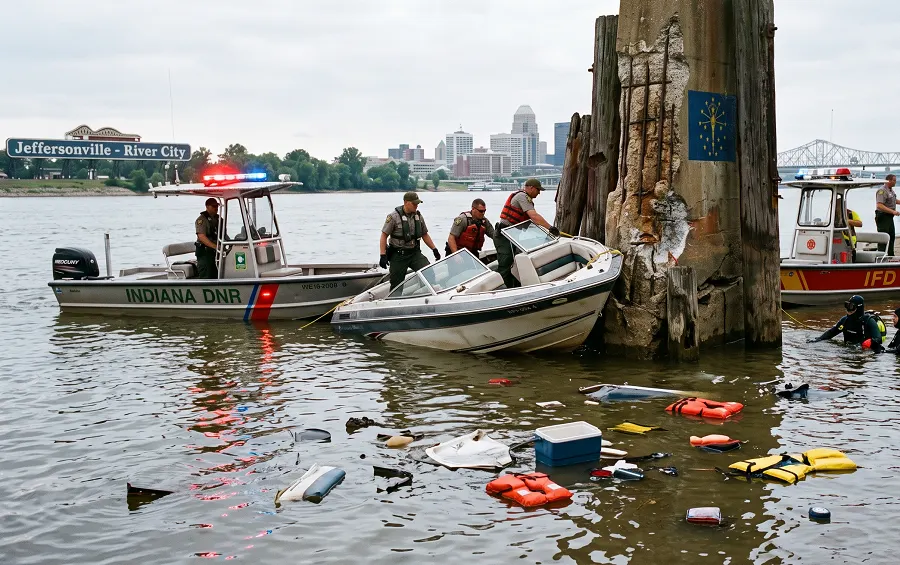
Identifying the cause of a boating accident is essential to establishing liability and building a strong personal injury case. Indiana boating accidents are most commonly caused by:
- Operator inattention or improper lookout: The U.S. Coast Guard consistently ranks inattention as the leading contributing factor in recreational boating accidents.
- Reckless operation and excessive speed: Speeding reduces reaction time and dramatically increases the severity of a collision involving boats and jet skis alike.
- Inexperience: Indiana law requires boater education for younger operators, but adults with a valid driver's license may operate watercraft without formal training. This safety gap puts others at risk.
- Alcohol impairment: Indiana sets the blood alcohol concentration threshold for boating while intoxicated at .08%, the same as for motor vehicle operation.
- Equipment failure: Mechanical failure in steering, propulsion, or safety systems can leave boat operators unable to control their vessel.
- Dangerous weather conditions: Storms, high winds, and reduced visibility require sound judgment that not every operator exercises.
- Violations of navigation rules: Both state and federal rules govern the operation of watercraft on shared waterways. When a boater fails to follow these rules, the consequences can be severe.
Our attorneys investigate every relevant factor to establish liability and support your legal claim.
Injuries Caused by Boating Accidents
The injuries caused in boating accidents are often severe. Unlike passengers in motor vehicle accidents, people on boats and jet skis are rarely belted in and may be thrown from the vessel entirely. Common injuries our clients have suffered include:
- Brain injuries: From striking the hull, deck, or water surface at speed, traumatic brain injuries can affect memory, cognition, and daily function for years.
- Spinal cord injuries: Including herniated discs, vertebral fractures, and, in the most serious cases, partial or complete paralysis.
- Broken bones and fractures: Particularly in the arms, legs, and ribs.
- Blunt force trauma to internal organs: Internal bleeding and organ damage that may not be immediately apparent.
- Lacerations and propeller injuries: These are among the most severe and disfiguring injuries in boating accident cases.
- Soft tissue injuries: Whiplash and joint damage that can cause chronic pain long after an accident.
- Drowning and near-drowning: With lasting neurological consequences in survivors.
- Emotional trauma: Anxiety, PTSD, and fear of open water are documented outcomes for survivors of serious boating accidents.
Any of these injuries can generate substantial medical expenses, time away from work, and long-term rehabilitation needs. Our goal is to pursue full compensation that accounts for every one of those losses.
Who Can Be Held Liable in a Boat Accident
One of the most important aspects of any boat accident case is identifying all liable parties — because in many situations, more than one party shares responsibility. Depending on the facts of your accident, potentially responsible parties may include:
- Boat operator: The person whose negligence or reckless operation directly caused the accident.
- Boat owner: The owner of the vessel may be liable even when someone else was at the helm.
- Rental company: A rental company that provides a poorly maintained vessel or fails to provide proper operating instructions can be held responsible for resulting injuries.
- Product manufacturer: When equipment failure or a defective part contributed to the crash, the manufacturer may face liability under product liability law.
- Other vessel operators: In multi-boat collisions, other operators whose conduct contributed to the accident may share responsibility.
- Government entity: A government agency responsible for waterway conditions or public marina maintenance may be a liable party in certain cases.
Our Indianapolis personal injury attorneys conduct a thorough investigation of each case to ensure all liable parties are identified before any claims are filed.
Compensation Available After a Boating Accident
Victims injured in a boating accident may be entitled to compensation through a personal injury lawsuit or settlement. Our attorneys work with medical experts and economic analysts to make sure every loss is accounted for.
Economic Damages
Economic damages cover measurable financial losses from the accident: medical bills and future treatment costs, wages lost during recovery, reduced future earning capacity, property damage to your vessel, and in cases involving fatalities, funeral costs and lost financial support for surviving family members.
Non-Economic Damages
Non-economic damages address the intangible toll of serious injuries, including physical pain and suffering, emotional trauma such as anxiety and PTSD, loss of enjoyment of life, and the impact on your relationships with a spouse or family members.
The value of any personal injury case depends on the severity of the injuries, the long-term prognosis, and the overall impact on your life and livelihood.
Deadlines for Filing a Boat Accident Claim in Indiana
Indiana law sets firm deadlines for boat accident claims, and missing them can permanently bar your right to seek compensation.

Standard Filing Deadline
Under Indiana Code § 34-11-2-4, most personal injury claims must be filed within two years of the date of the accident. Missing this deadline typically means permanently losing your right to seek compensation.
Claims Involving Government Entities
If a government entity is involved, Indiana's Tort Claims Act imposes formal notice filing requirements that can significantly shorten the effective deadline. Contact our team as soon as possible after your accident to protect your legal rights.
What to Do After a Boating Accident
Taking the right steps after a boat accident protects both your health and your legal claim:
- Get immediate medical attention: Do this even if your injuries seem minor. Some serious injuries, including brain injuries and internal organ damage, do not produce obvious symptoms right away.
- Report the accident: Under Indiana law, boating accidents resulting in death, injury, or significant property damage must be reported to the Indiana Department of Natural Resources.
- Document everything: Photograph the scene, any visible injuries, vessel damage, and the surrounding area.
- Gather witness information: Names and contact details of anyone who witnessed the accident.
- Preserve evidence: Keep clothing, damaged personal items, and any accident-related documents.
- Avoid recorded statements: Do not give statements to insurance companies before speaking with an attorney.
- Contact a boat accident lawyer in Indianapolis: The sooner you reach out, the better your team's ability to preserve evidence and build a strong case.
Our team can guide you through each step and take over all communication with insurance companies from day one. The sooner we get involved, the stronger your legal position will be.

Injured on Indiana's Waters? Let's Talk.
Our Indianapolis boating accident attorneys will review your case and pursue full compensation. There’s no fee unless we win.



.avif)
.avif)


