

%20(1).avif)





.avif)


Why Indianapolis Uber Accidents Are More Complex Than Regular Car Crashes
Uber accidents in Indianapolis involve complications that don't exist in typical motor vehicle crashes. The company's business model creates multiple layers of insurance coverage, shifting liability based on the driver's app status, and employs corporate legal strategies designed to minimize its liability for accidents.
Here's what makes Indianapolis rideshare accidents particularly challenging:
- Multiple insurance policies: Uber provides different coverage amounts depending on whether the driver was offline, waiting for rides, or actively transporting passengers.
- Corporate liability shields: Uber classifies drivers as independent contractors rather than employees to limit its direct liability for accidents.
- Evidence preservation issues: Critical data on the driver's status, trip details, and app usage can be lost if not preserved immediately.
- Out-of-state corporate defendants: Uber's corporate structure spans multiple states, complicating where and how lawsuits can be filed.
Indianapolis experiences particularly high rideshare usage around Lucas Oil Stadium during Colts games, Gainbridge Fieldhouse for Pacers games and concerts, Indianapolis International Airport pickup zones, and downtown entertainment districts such as Mass Avenue and Fountain Square. These areas generate surge pricing periods when tired, rushed drivers operating unfamiliar vehicles create dangerous conditions for passengers and other motorists.
The Reality of Uber's Insurance Coverage in Indiana
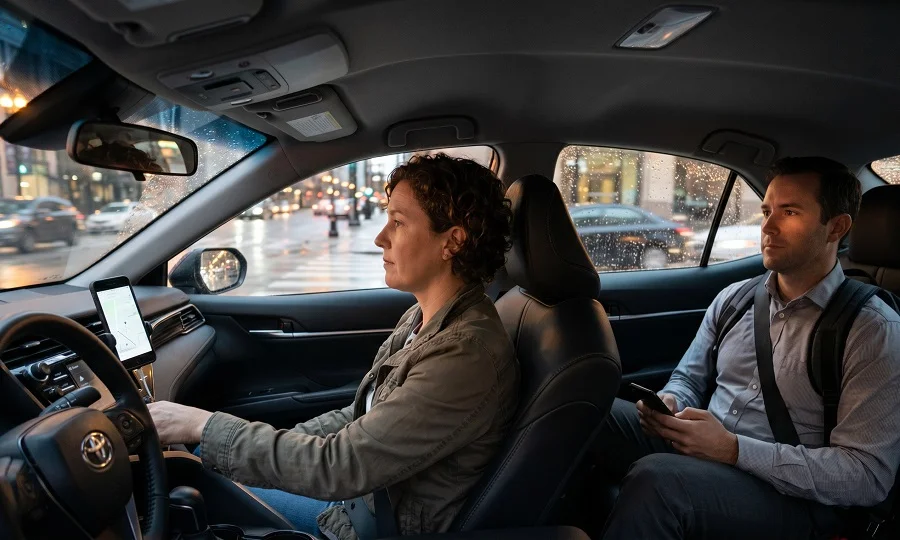
Understanding Uber's insurance structure is crucial for maximizing your compensation. The company offers coverage amounts based on the driver's app status at the time of your accident, but it doesn't disclose how limited some of these policies are.
Period 1: Driver App On, No Passenger Request
When an Uber driver has their app on but hasn't received a ride request, Uber provides minimal coverage:
- $50,000 per person for bodily injury
- $100,000 per accident for bodily injury
- $25,000 for property damage
This coverage is often inadequate for serious injuries from crashes involving rideshare vehicles during busy Indianapolis traffic periods.
Period 2: Driver Matched with Passenger, En Route to Pickup
Once a driver accepts a ride request and is traveling to pick up the passenger, Uber's coverage increases to:
- $1 million in liability coverage
- $1 million in uninsured/underinsured motorist protection
- Comprehensive and collision coverage (if driver carries it)
Period 3: Passenger in Vehicle During Active Trip
While you're actually riding in the Uber vehicle, the company provides its highest level of coverage:
- $1 million in third-party liability
- $1 million in uninsured/underinsured motorist coverage
- Up to $1 million in contingent comprehensive and collision
The problem is determining which period applies to your accident. Uber's internal data controls this determination, and the company has incentives to classify accidents under lower coverage periods when possible.
Common Causes of Indianapolis Uber Accidents
Indianapolis rideshare accidents often stem from factors beyond typical driver error. The business model itself creates dangerous conditions that wouldn't exist with traditional taxi services or personal vehicle use.
Distracted Driving from App Management
Uber drivers constantly interact with their smartphones to:
- Accept ride requests while driving
- Navigate to pickup locations using GPS
- Communicate with passengers through the app
- Monitor surge pricing and ride opportunities
- Update their availability status
This screen time creates significant distraction risks, especially during heavy traffic periods on I-465, I-70, or I-65 around Indianapolis.
Unfamiliar Territory and Navigation Issues
Many Uber drivers operate outside their normal geographic areas, leading to:
- Last-minute lane changes to reach destinations
- Sudden stops or turns when missing exits
- Confusion about one-way streets in downtown Indianapolis
- Unsafe parking or pickup maneuvers in unfamiliar neighborhoods
Driver Fatigue and Extended Hours
Unlike traditional taxi companies with shift limits, Uber drivers can work unlimited hours, resulting in:
- Fatigued drivers working late nights during peak demand periods
- Drivers working multiple rideshare platforms simultaneously
- Extended driving during major Indianapolis events when surge pricing incentivizes long hours
Inadequate Vehicle Maintenance
Since Uber drivers use personal vehicles for commercial purposes:
- Regular maintenance may be deferred due to high mileage usage
- Tire, brake, and safety system problems develop faster
- Drivers may operate vehicles that wouldn't pass commercial vehicle inspections

Rideshare accidents in Indianapolis often result in severe injuries due to the urban driving environment, high-traffic areas, and the vulnerability of passengers who aren't controlling the vehicle.
Passengers in Uber vehicles are particularly vulnerable to head trauma because:
- They may not anticipate sudden stops or direction changes
- Rear-seat passengers often lack proper headrest positioning
- Side-impact collisions from distracted driving cause severe head injuries
Traumatic brain injuries from rideshare accidents can result in:
- Cognitive impairment affecting work performance
- Memory problems and concentration difficulties
- Personality changes that strain family relationships
- Long-term medical care and rehabilitation needs
The seating position in rideshare vehicles, combined with unexpected crashes, frequently causes:
- Herniated discs requiring surgical intervention
- Spinal compression injuries from rear-end collisions
- Permanent disability affecting mobility and independence
- Chronic pain requiring ongoing medical treatment
High-speed crashes common on Indianapolis highways can cause:
- Internal bleeding requiring emergency surgery
- Punctured lungs or damaged organs from broken ribs
- Abdominal injuries that may not be immediately apparent
- Life-threatening complications requiring intensive care
Indiana Law and Your Uber Accident Rights
Indiana's legal framework creates both opportunities and challenges for rideshare accident victims. Understanding these laws is crucial for building a successful case.
Indiana's Modified Comparative Fault Rule
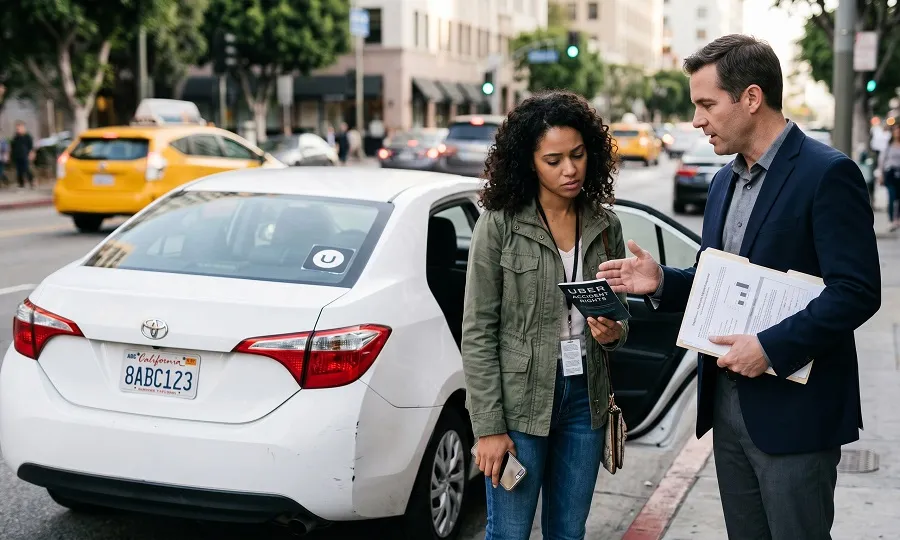
Under Indiana Code § 34-51-2-6, you can recover compensation even if you were partially at fault for the accident, as long as your fault doesn't exceed 50%. This rule becomes particularly important in Uber accidents where multiple factors may contribute to crashes.
For example: If you were injured while an Uber driver was speeding and texting, but you weren't wearing a seatbelt, a jury might find you 20% at fault and the driver 80% at fault. You could still recover 80% of your total damages.
Statute of Limitations for Indianapolis Uber Accidents
Indiana Code § 34-11-2-4 gives you two years from the date of your accident to file a lawsuit. However, certain circumstances can extend this deadline:
- Discovery of injuries that weren't immediately apparent
- Cases involving minors (deadline extends until age 20)
- Situations where evidence was concealed or destroyed
Missing this deadline means losing your right to compensation forever, regardless of how strong your case might be.
Indiana's Transportation Network Company Regulations
Indiana HB 1278 established specific requirements for rideshare companies operating in the state, including:
- Background check requirements for drivers
- Insurance coverage minimums during different app periods
- Vehicle inspection and safety standards
- Disclosure requirements for accident reporting
When Uber fails to comply with these state regulations, it can create additional liability for accidents involving their drivers.
How CohenMalad Can Help Your Indianapolis Uber Accident Case
We aren't a settlement mill. With over 55 years of experience and major verdicts including a $66.5 million medical malpractice award, we're a law firm that fights and wins against major corporations.
Here's what you can expect working with CohenMalad, LLP:
- Free, no-obligation case evaluation to determine the strength of your claim.
- Immediate investigation to preserve crucial evidence before it disappears.
- Collaboration with accident reconstruction specialists who can prove what really happened.
- Medical expert consultation to document the full extent of your injuries.
- Aggressive negotiation with Uber's insurance carriers and legal team.
- Trial-ready preparation so every case is built to win in court if necessary.
The Legal Process for Your Indianapolis Uber Accident Lawsuit

Step 1: Free Case Review
We evaluate your accident, injuries, and potential claims to determine whether you have a strong case. This consultation costs nothing and creates no obligation.
Step 2: Investigation and Evidence Preservation
If you have a case, we immediately begin preserving evidence that could disappear, including:
- Uber's app data showing driver status at the time of the accident
- Vehicle maintenance records and driver history
- Surveillance footage from nearby businesses or traffic cameras
- Witness statements and police reports
- Medical records documenting your injuries
Step 3: Filing Your Lawsuit
We file a comprehensive complaint detailing the accident, your injuries, and all parties responsible for compensation. This includes Uber, its insurance companies, other drivers involved, and any third parties whose negligence contributed to your accident.
Step 4: Discovery and Case Development
We obtain internal company documents, deposition testimony, and evidence showing:
- What Uber knew about driver safety issues
- Whether proper background checks and vehicle inspections were conducted
- How the company's policies and procedures contributed to your accident
- The full extent of insurance coverage available for your claim
Step 5: Resolution
We negotiate aggressively to secure the maximum compensation, or we take your case to trial, if necessary. You receive compensation only after we successfully resolve your case.
Time Limits for Filing Your Indianapolis Uber Accident Lawsuit

There's a limited time to file a lawsuit for your rideshare accident injuries. Indiana's statute of limitations gives you two years from the accident date to file a claim, but certain circumstances can affect this deadline.
Why Timing Matters
- Missing the deadline means losing your right to compensation forever
- Evidence becomes harder to gather as time passes
- Witness memories fade, and people move away
- Medical records may be destroyed or become unavailable
- App data and electronic evidence may be deleted
The Importance of Acting Quickly
Even though you have two years to file a lawsuit, starting your case immediately provides significant advantages:
- Evidence preservation: Critical data can be lost or destroyed if not preserved quickly
- Witness availability: People's memories are clearer shortly after accidents
- Medical documentation: Connecting injuries to your accident becomes more difficult over time
- Insurance company cooperation: Delays often lead to more aggressive denial strategies
Don't wait to find out whether you still have time. Call us today for a free evaluation of your case and to discuss your filing deadline.

Get the Legal Help You Need — Call Now
Don't let Uber's insurance company take advantage of you. Our Indianapolis rideshare accident attorneys know how to investigate app status, preserve crucial evidence, and fight for maximum compensation.

