

%20(1).avif)
Insufficient Funds Fees Lawsuit Lawyers
We Take Banks to Court
.webp)
Our Class Action Lawsuits Cases
.svg)


1B+
recovered for clients
300+
years of combined experience
500+
cases won
Why Choose CohenMalad, LLP for Your Insufficient Funds Fees Lawsuit?
Banks make billions charging customers excessive fees for failed payments, often hitting you with multiple penalties for the same bounced check or declined transaction. When they violate federal banking laws and their own account agreements to maximize fee income, they must face the consequences in court. Our team at CohenMalad, LLP has been taking on financial institutions for over 55 years.
We've built our reputation by going after banks that put profits before customers. Our firm has the courtroom experience, financial resources, and aggressive litigation approach needed to challenge major institutions when they cross the line. We don't settle for whatever banks want to pay; we fight for maximum recovery.
If your bank charged you multiple insufficient funds (NSF) fees for the same failed payment, or hit you with overdraft fees when your account showed sufficient funds, you deserve compensation. We'll take your bank to court and make them pay for violating your account agreement and federal banking laws.


.avif)


What Are Insufficient Funds Fees and Why Are They Illegal?
Insufficient funds (NSF) fees are penalties banks charge when a payment from your account fails due to a lack of money. These fees typically range from $25 to $35 per failed payment. Here's where banks cross the line into illegal territory:
- Multiple fees for one payment: When a merchant resubmits a declined payment, your bank charges you a new NSF fee each time, turning one $35 penalty into $105 for the same failed payment.
- Authorize positive, settle negative (APSN) fees: Your bank approves a debit card purchase when you have sufficient funds, but then charges an overdraft fee when the transaction processes days later.
- Fee-on-fee charges: Banks count their own overdraft fees as transactions that can trigger additional fees.
- Transaction reordering: Processing your largest purchases first to maximize the number of overdraft fees.
These practices violate federal banking regulations and your account agreement. Banks cannot legally charge multiple fees for the same underlying failed payment, yet they've collected billions doing exactly that.
The Federal Laws Banks Are Breaking

Federal regulations strictly control how banks can charge overdraft and NSF fees. When banks ignore these rules to boost their profits, they're breaking the law.
Regulation E Violations (12 CFR § 1005.17)
The Federal Reserve's Regulation E requires banks to get your written consent before charging overdraft fees on debit card transactions. Many banks violated this rule by:
- Taking verbal consent instead of written authorization;
- Enrolling customers without any consent;
- Charging fees on transactions you never agreed to cover;
- Failing to provide required disclosures about fee amounts.
Electronic Fund Transfer Act Violations
The federal Electronic Fund Transfer Act (15 U.S.C. § 1693l-1) prohibits banks from charging overdraft fees without your affirmative consent. Banks that enrolled customers automatically or through deceptive practices violated federal law.
Unfair and Deceptive Practices
The Consumer Financial Protection Bureau has determined that certain fee practices constitute unfair and deceptive acts under federal law, including:
- Charging fees when consumers had no reasonable way to avoid them
- Misrepresenting how fees are calculated
- Failing to disclose that one payment could trigger multiple fees
Banks have paid over $4.5 billion in federal penalties for these illegal practices since 2022. Now it's time for individual customers to get their money back.
How Banks Manipulate Your Account to Generate More Fees

Banks have developed sophisticated systems to maximize fee income from customer accounts. Understanding these tactics helps explain why your account gets hit with so many unexpected charges.
The Multiple NSF Fee Scam
Here's how banks turn one failed $50 payment into $105 in fees:
- Day 1: Your $50 automatic bill payment fails → bank charges $35 NSF fee.
- Day 3: Merchant resubmits the same $50 payment → bank charges another $35 NSF fee.
- Day 5: Merchant tries one final time → bank charges a third $35 NSF fee.
- Total: You pay $105 in fees for one $50 failed payment.
This violates your account agreement because most contracts specify "per item" fees, not "per attempt" fees. One payment should equal one fee, period.
Transaction Reordering to Maximize Overdrafts
Consider this scenario: You have $100 in your account and make four purchases in one day: $10, $15, $25, and $80.
If processed in order made:
- $10 purchase → $90 balance → no fee
- $15 purchase → $75 balance → no fee
- $25 purchase → $50 balance → no fee
- $80 purchase → -$30 balance → one $35 fee
If processed largest to smallest:
- $80 purchase → $20 balance → no fee
- $25 purchase → -$5 balance → $35 fee
- $15 purchase → -$20 balance → $35 fee
- $10 purchase → -$30 balance → $35 fee
Same transactions, same day, but reordering generates $105 in fees instead of $35. This manipulation has nothing to do with when you made the purchases and everything to do with maximizing bank profits.
Recent Bank Fee Settlements Prove These Cases Win
Banks are paying millions to settle lawsuits over insufficient funds fees because they know their practices violate federal law and customer agreements.
Major Settlements in 2024-2025
- TD Bank: $32.2 million settlement for authorized positive, settle negative fees.
- Navy Federal Credit Union: $16 million settlement for multiple NSF fees on resubmitted payments.
- Cadence Bank: $4.5 million settlement for surprise overdraft fees.
- Central Bank: $4.85 million settlement for multiple fee practices.
- Midland States Bank: $3.1 million settlement for fee-on-fee charges.
- Trustco Bank: $2.75 million settlement for retry NSF fees.
Federal Enforcement Actions
The Consumer Financial Protection Bureau has ordered banks to pay massive penalties:
- Navy Federal Credit Union: $95 million for surprise overdraft fees (November 2024).
- Regions Bank: $191 million for illegal overdraft practices.
- Bank of America: $250 million for multiple fee violations.
- Wells Fargo: $3.7 billion for various overdraft and fee abuses.
These settlements and enforcement actions prove that banks are breaking the law. If your account was hit with excessive NSF fees, you have a strong legal claim.
Who Can File an Insufficient Funds Fees Lawsuit?

You may have a valid legal claim if you:
- Were charged multiple NSF fees for the same failed payment or bounced check.
- Paid overdraft fees on transactions that showed sufficient funds when you made them.
- Were enrolled in overdraft protection without giving written consent.
- Had transactions reordered to maximize overdraft fees.
- Paid fees on top of fees (like overdraft fees triggering additional NSF charges).
- Were charged NSF fees on automatically declined debit card transactions.
The timing and amount of fees matter for your case. Banks that charged multiple fees for the same payment or hit you with surprise overdraft fees likely violated your account agreement and federal banking laws.
What If I Closed My Account or Switched Banks?
You can still file a lawsuit. Your legal claim is based on the illegal fees your former bank charged, not whether you still do business with them. We can recover money for fees charged years ago if they violated the law.
What If I Don't Have All My Bank Statements?
We can get your records. Banks are required to maintain customer account records for several years. Our investigation includes obtaining all necessary documentation to prove the illegal fees your bank charged.
Compensation Available for Insufficient Funds Fee Victims

Every case is different, but insufficient funds fee victims may recover:
- All illegal NSF fees paid to your bank over the relevant time period
- All surprise overdraft fees charged on transactions showing sufficient funds
- Interest on the money banks illegally collected from your account
- Punitive damages for willful violations of banking regulations
- Attorney fees and costs under federal banking laws
Calculating Your Potential Recovery
Several factors affect your compensation:
- Number of illegal fees: More violations mean higher recovery.
- Duration of violations: Long-term patterns of illegal fees increase damages.
- Fee amounts: Higher per-transaction fees result in larger recoveries.
- Account history: Frequency of NSF and overdraft activity affects total damages.
Recent settlements show that substantial recoveries are possible. The TD Bank settlement ($32.2 million) and Navy Federal settlement ($16 million) demonstrate that banks will pay significant compensation when caught breaking the law.
How CohenMalad, LLP Can Help Your Insufficient Funds Fees Case
We aren't a settlement mill. With attorneys recognized among the top in the nation and over $1 billion recovered for clients, we're a law firm that takes banks to court and wins.
What You Can Expect Working with CohenMalad, LLP
- Free, no-obligation case evaluation to determine whether your bank violated federal law.
- Thorough investigation of your account history, fee patterns, and bank practices.
- Aggressive pursuit of maximum compensation for all illegal fees.
- Trial-ready preparation so every case is built to win in court if necessary.
- Direct challenge to bank fee practices that violate customer rights.
We take on major financial institutions and hold them accountable. If your bank charged you illegal insufficient funds fees, you need a legal team that won't be intimidated by corporate lawyers.
Our Track Record Against Financial Institutions
CohenMalad, LLP has successfully fought banks and financial companies in cases involving:
- Illegal fee practices that violated customer account agreements
- Deceptive banking practices that misled consumers about costs
- Regulatory violations where banks ignored federal banking laws
- Class action litigation affecting thousands of customers nationwide
We know how banks operate and how to beat them in court. We do it all the time.
Time Limits for Filing Your Insufficient Funds Fees Lawsuit

There's a limited time to file a lawsuit for illegal bank fees. Each state has its own statute of limitations, giving you a specific number of years from when the illegal fees were charged to file a lawsuit.
Why Timing Matters
- Missing deadlines means losing your right to compensation forever
- Bank records may be destroyed after certain time periods
- Evidence becomes harder to gather as time passes
- Pattern evidence may be lost if you wait too long
The discovery rule may extend your deadline. If your bank concealed the illegal nature of its fee practices, the statute of limitations may not start until you discovered (or should have discovered) that the fees violated the law.
Don't wait to find out whether you still have time. Call us today for a free evaluation of your case and filing deadline.

Find Out What Your Bank Owes You — Call Now
Don't let your bank get away with charging illegal fees. We'll investigate your account and fight for every dollar they owe you.
Get Back What’s Owed to You
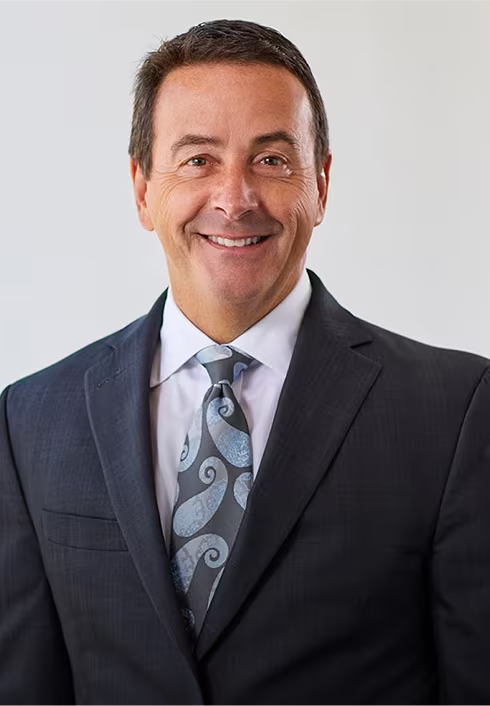
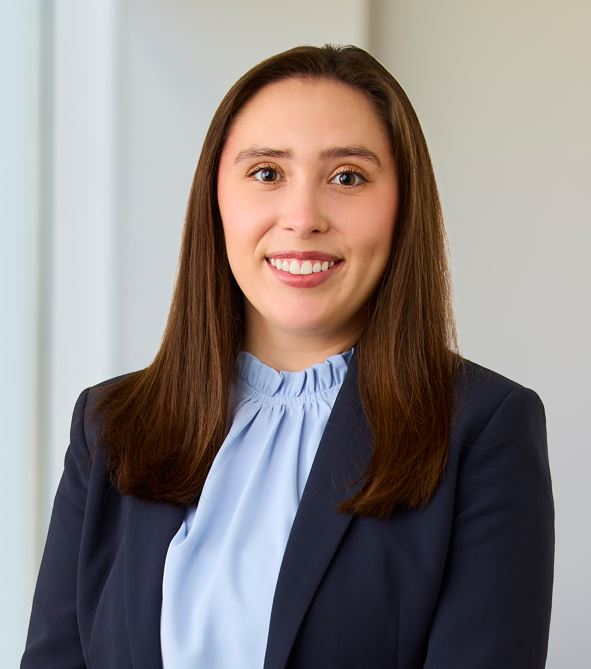
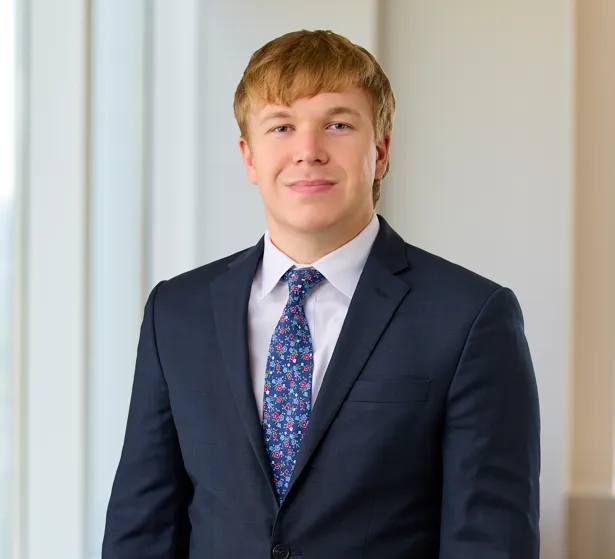
Meet Our Banking and Financial Services Litigation Team
CohenMalad, LLP has spent over 55 years building a reputation for taking on corporate giants and winning. Our attorneys have fought some of the biggest names in banking and financial services, securing millions for clients harmed by illegal practices.




.avif)
.avif)
%20B.%20Mulligan%20V.avif)


.avif)




Frequently Asked Questions About Insufficient Funds Fees Lawsuits
Don't Let Your Bank Keep Your Money
Call CohenMalad, LLP today for your free consultation. We'll review your case, explain your legal options, and help you understand what compensation you may be entitled to receive.
Your bank made millions charging illegal fees. It's time for them to pay it back. Contact us now and let us fight for the justice you deserve.
