

%20(1).avif)




.avif)


What Are Indianapolis Delivery Vehicle Accidents?
Indianapolis has become ground zero for America's delivery explosion. The numbers reveal why these accidents are increasing across our city and why they're more dangerous than typical car crashes.
Amazon's Indianapolis empire:
- IND4 Fulfillment Center on Girls School Road processes 710,000+ packages weekly;
- Whitestown facility spans 630,000 square feet (Amazon's largest Indiana operation);
- Greenwood Mini-Fulfillment handles 100,000+ same-day delivery packages weekly;
- Over 4,400 Delivery Service Partner (DSP) contractors nationwide operating Amazon-branded vans;
- $25.5 billion total Amazon investment in Indiana since 2010;
- Amazon Flex drivers using personal vehicles with minimal oversight.
FedEx's massive hub infrastructure:
- 2.4 million square feet at Indianapolis International Airport;
- Second-largest FedEx hub worldwide, processing 111,000 packages per hour;
- Nearly 4,000 employees generating constant commercial traffic;
- $1.5 billion facility expansion completed in 2025;
- Critical sorting operations for the entire Midwest region.
UPS Plainfield superhub:
- 893,000 square feet processing 58,000 packages hourly;
- 275 local delivery trucks based at this single facility;
- One of only five UPS superhubs nationally;
- Serves as a distribution center for multiple states.
Food delivery and gig economy growth: The growth of DoorDash, Uber Eats, Grubhub, and Instacart is creating thousands of additional delivery vehicles on Indianapolis streets. These drivers often lack commercial insurance, receive minimal safety training, and face pressure to complete deliveries quickly for minimal pay.
Indianapolis traffic corridor dangers: I-465 Beltway handles over 200,000 vehicles daily and contains three of the nation's worst traffic bottlenecks. Key danger zones include the I-465/I-69 interchange near Amazon facilities, the I-465/I-65 junction, and the I-465/I-70 intersection, which handles cross-country freight.
Federal Motor Carrier Safety Administration data shows:
- Indiana ranks 9th most dangerous state for truck accidents;
- 5,215 truck crashes occur annually in Indiana (14 per day);
- 151 fatalities and 1,675 injuries per year;
- 86.9% of crashes occur on state roads, U.S. routes, or interstates.
This infrastructure means thousands of delivery vehicles traverse Indianapolis roads daily, creating accident scenarios that didn't exist a decade ago. More delivery trucks mean more accidents, more severe injuries, and more families facing corporate greed that prioritizes profits over public safety.
Risks and Consequences of Indianapolis Delivery Vehicle Accidents
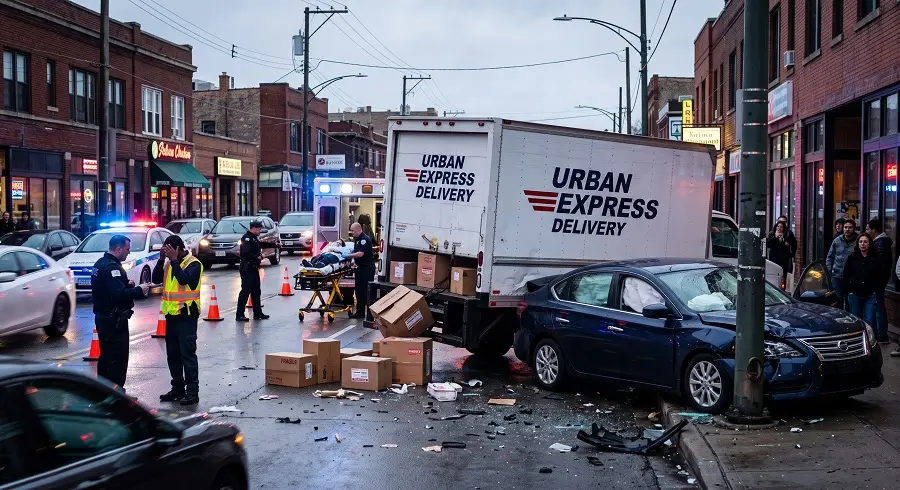
Delivery vehicle accidents cause devastating injuries that destroy lives and the financial security of your family. The physics are simple: when 20,000+ pound commercial vehicles hit a 3,500-pound passenger car, the occupants can be subjected to life-threatening forces.
Types of delivery vehicle accidents:
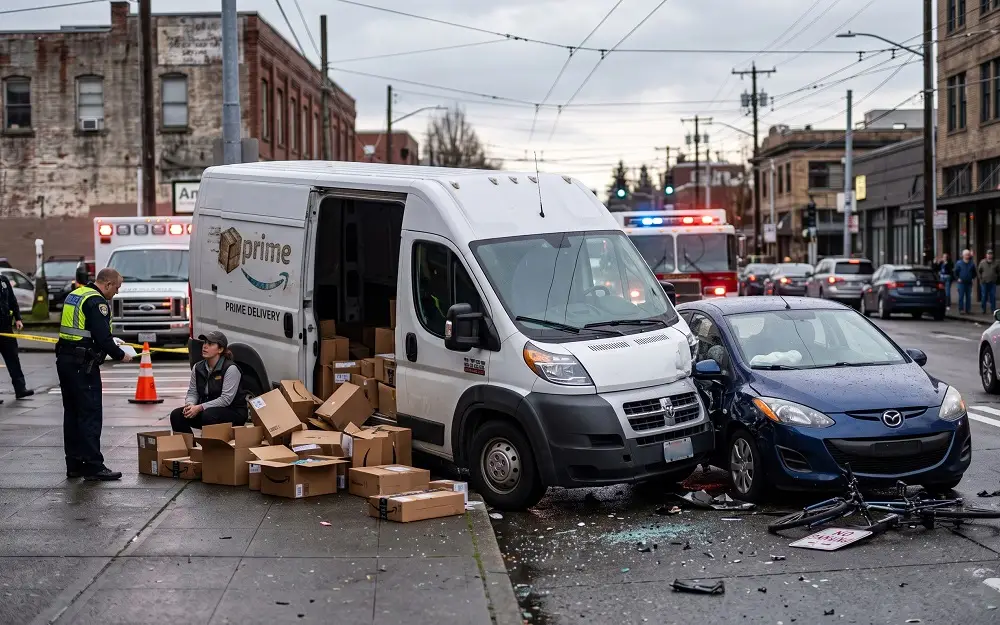
- Amazon DSP van accidents: Amazon operates through Delivery Service Partners (DSPs), which employ drivers in Amazon-branded blue vans. These accidents raise complex liability issues because Amazon classifies the DSPs as independent contractors, thereby shielding Amazon from liability. However, Amazon controls routes, delivery quotas (350 to 400 packages per day), and monitors drivers via Netradyne cameras.
- FedEx Express vs. Ground accidents: FedEx Express drivers are company employees with clearer liability, while FedEx Ground uses independent contractors similar to Amazon's model. Express vehicles carry $5 million insurance coverage, while Ground contractors may have lower limits.
- UPS employee-based accidents: UPS maintains direct employment relationships with most drivers, making liability more straightforward. However, the company aggressively defends claims and attempts to minimize settlements.
- Food delivery platform accidents: DoorDash, Uber Eats, Grubhub, and Instacart create coverage gaps, leaving drivers without commercial insurance. Coverage varies significantly:
- DoorDash/Uber Eats: $1 million when active, $50K/$100K/$25K when waiting.
- Grubhub: Zero coverage except in California.
- Instacart: No company coverage provided.
Who Is Eligible to File a Lawsuit Against Delivery Companies
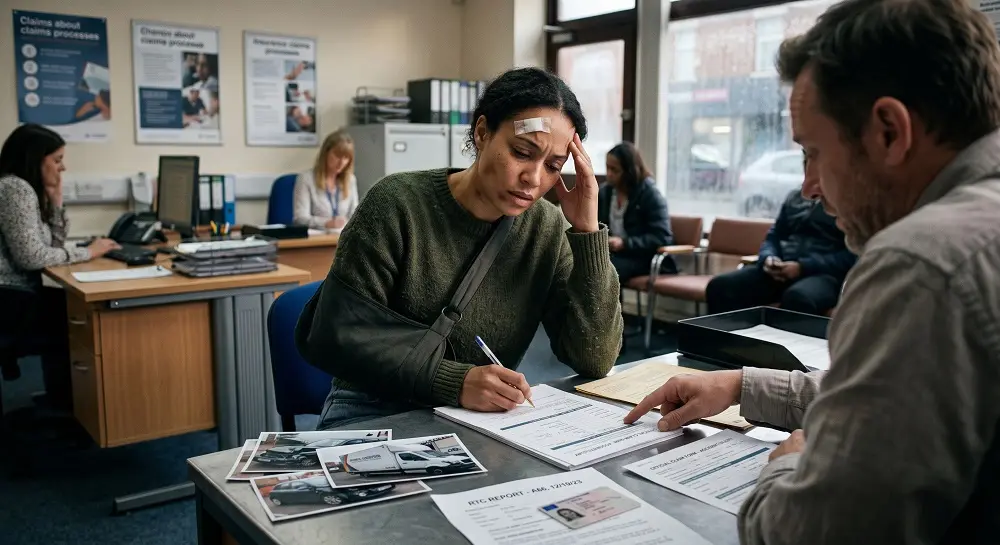
You may be eligible to file a claim if you:
- Were injured in an accident involving an Amazon, FedEx, UPS, or other delivery vehicle.
- Suffered injuries from a food delivery driver (DoorDash, Uber Eats, Grubhub, Instacart).
- Were hurt by a delivery driver who was speeding, distracted, or driving recklessly.
- Lost a loved one in a fatal delivery vehicle accident.
- Experienced property damage from a commercial delivery vehicle collision.
- Were injured as a pedestrian or cyclist struck by a delivery vehicle.
The type of delivery vehicle is critical to your case. Amazon DSP drivers operate under complex contractor relationships designed to shield Amazon from liability. UPS drivers are company employees, creating clearer liability paths. Food delivery drivers often have minimal insurance coverage, requiring investigation of multiple compensation sources.
If any of these circumstances apply to you, contact us today. We'll review your case for free and help you understand your legal options against these corporate defendants.
How CohenMalad Can Help
We aren't a settlement mill. With attorneys ranked among the top 50 in the nation and over $1 billion recovered for clients, we're a law firm that fights and wins against major corporations.
Here's what you can expect when you work with CohenMalad, LLP:
- Free, no-obligation case evaluation to determine whether you have a strong claim against delivery companies.
- Immediate evidence preservation through spoliation letters demanding electronic data retention.
- Aggressive investigation into driver negligence, corporate liability, and federal regulation violations.
- Collaboration with accident reconstruction specialists to prove fault and establish damages.
- Trial-ready preparation so every case is built to win in court if necessary.
Our investigation process includes:
- Electronic Logging Device (ELD) data analysis before automatic deletion;
- Driver personnel files, training records, and background check failures;
- Corporate policies that encourage unsafe driving through delivery quotas;
- Vehicle maintenance records and mechanical failure evidence;
- Witness statements and traffic camera footage from accident scenes.
We take on delivery giants and hold them accountable. Amazon, FedEx, and UPS have unlimited legal budgets, but we have 55+ years of courtroom experience and the resources to match their defense teams.
The Legal Process for Filing an Indianapolis Delivery Vehicle Accident Lawsuit

Step 1: Free Consultation
We evaluate your accident circumstances, injury documentation, and potential claims against delivery companies at no cost to determine the strength of your case.
Step 2: Immediate Evidence Preservation
Time is critical. We send spoliation letters demanding the preservation of Electronic Logging Device data, GPS tracking data, maintenance records, driver files, and dispatch communications before automatic deletion.
Step 3: Comprehensive Investigation
Our team conducts accident reconstruction, assesses federal regulatory violations and corporate liability tied to company policies, and evaluates driver negligence through background checks and safety records.
Step 4: Medical Documentation and Damages
We work with specialists to document current injuries, establish long-term prognosis, calculate lifetime medical costs, and obtain opinions on pain, suffering, and life impact.
Step 5: Aggressive Negotiation or Trial
We prepare every case for trial while pursuing maximum settlement. Insurance companies know we won't accept lowball offers, strengthening our negotiating position.
Indiana Law and Your Rights in Delivery Vehicle Accident Cases
Modified Comparative Fault Rule: Indiana follows modified comparative fault under Indiana Code 34-51-2-6. You can recover damages if you're 50% or less at fault. Your compensation is reduced by your percentage of fault. If you're 51% or more at fault, you recover nothing.
Example: If you're found 20% at fault and the damages total $200,000, you recover $160,000.
Federal Motor Carrier Safety Administration regulations: Delivery vehicles over 10,001 pounds Gross Vehicle Weight Rating trigger Federal Motor Carrier Safety Regulations, including:
- Maximum 11 hours driving per day
- 14-hour duty window including non-driving time
- Mandatory 30-minute breaks after 8 hours
- 10-hour rest periods between shifts
- Electronic Logging Device (ELD) requirements
- Drug and alcohol testing programs
Insurance requirements by vehicle type:
Multiple potentially liable parties: Delivery vehicle accidents often involve several defendants:
- Driver (personal negligence)
- Employer/company (vicarious liability, negligent hiring/training)
- DSP contractor (for Amazon cases)
- Vehicle manufacturer (defects)
- Maintenance company (negligent repairs)
- Cargo loading company (improperly secured loads)
Breaking through Amazon's liability shield: Courts increasingly reject Amazon's "independent contractor" defense by examining:
- DSP contracts showing Amazon's operational control
- Netradyne camera monitoring and driver discipline
- Performance metrics and route assignments
- Training requirements and safety protocols
- Delivery quotas and time pressure policies
Federal Tort Claims Act (USPS Accidents): United States Postal Service accidents are subject to special federal rules, including shorter filing deadlines and different procedures.
Wrongful death claims: When delivery vehicle accidents result in fatalities, surviving family members can pursue wrongful death compensation under Indiana Code 34-23-1 for lost financial support, medical expenses, and funeral costs.
Statute of Limitations for Indianapolis Delivery Vehicle Accident Lawsuits

There's a limited time to file a lawsuit for injuries caused by delivery vehicle accidents. Indiana's statute of limitations gives you two years from the accident date to file a personal injury claim.
Missing this deadline means losing your right to compensation forever.
Exceptions may extend this deadline:
- Discovery rule applies when injuries weren't immediately apparent.
- Fraudulent concealment if the defendants hid the negligence information.
- Different rules for wrongful death claims and accidents involving minors.
Why waiting is dangerous:
- Electronic data gets overwritten or deleted from delivery vehicles.
- Witnesses forget critical details or become difficult to locate.
- Medical records may be destroyed under routine retention policies.
- Corporate defendants have more time to build legal defenses.
Call us today to make sure your case is filed on time. Don't gamble with your legal rights when dealing with well-funded corporate defendants.

Take Action — Contact CohenMalad Today
If you've suffered devastating injuries from a delivery vehicle accident, we're here to fight for you. Don't let corporate lawyers minimize your claim while you're focused on recovery.



.avif)
.avif)


