

%20(1).avif)




.avif)


How Drunk Driving Accidents Differ from Other Car Accident Cases
Drunk driving accident claims involve legal issues that go beyond a typical personal injury case. Here is what sets them apart:
Civil and criminal proceedings run separately. When a drunk driver is arrested and faces OWI charges under Indiana Code § 9-30-5, that is a criminal matter handled by the state. Your right to pursue a personal injury claim for damages is entirely separate. Even if criminal charges are reduced or the case is dismissed, you can still seek compensation in civil court.
Punitive damages may apply. Indiana courts can award punitive damages in cases involving gross negligence or willful misconduct, and drunk driving often qualifies. These damages go beyond compensatory damages and are designed to hold the at-fault driver accountable for choices that endangered everyone on the road. Our attorneys know how to present the evidence needed to pursue punitive damages where appropriate.
Insurance companies approach these claims aggressively. Insurers know the stakes in drunk driving cases. They may attempt to dispute the extent of your injuries, challenge your medical expenses, or shift partial fault onto you. Having an experienced attorney in your corner during settlement negotiations levels the playing field.
A DUI conviction can strengthen your civil case. Drunk driving convictions, OWI guilty pleas, and field sobriety or chemical test results are powerful evidence in a personal injury lawsuit. Our attorneys know how to use this documentation to build a compelling claim on your behalf.
Injuries Commonly Seen in Drunk Driving Accidents

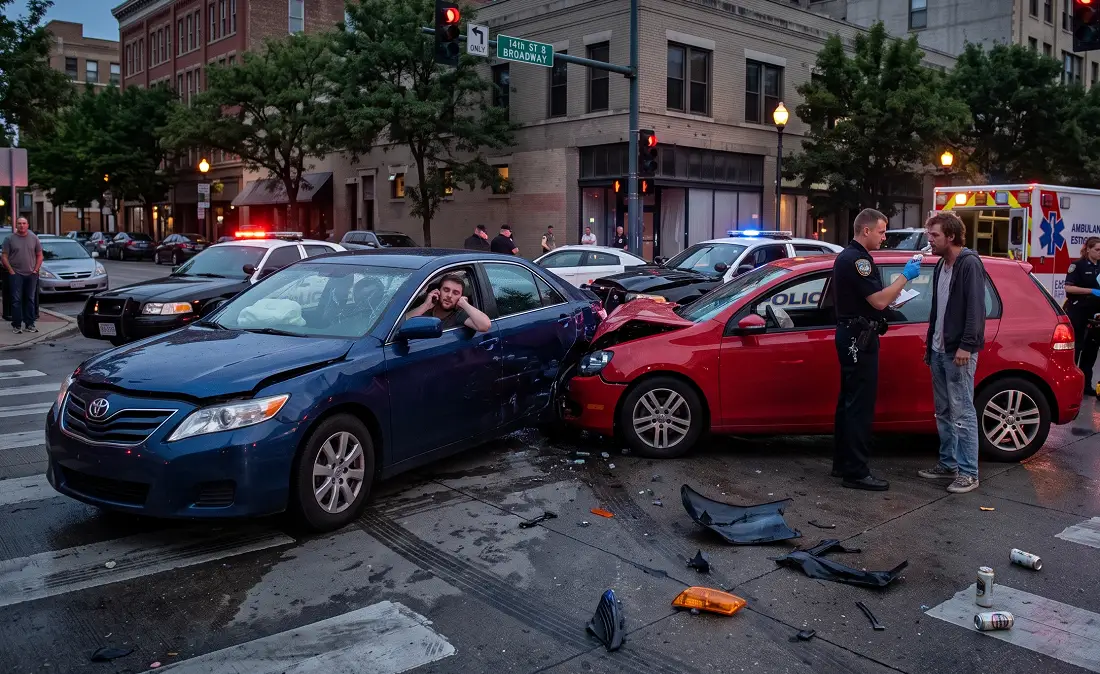
Crashes caused by drunk drivers tend to be severe. Impaired drivers frequently fail to brake, swerve into oncoming traffic, or run red lights at high speed. Victims of these collisions often suffer serious injuries, including:
- Traumatic brain injuries (TBIs): Ranging from concussions to permanent cognitive impairment.
- Spinal cord damage: Including herniated discs, fractures, and partial or complete paralysis.
- Broken bones and orthopedic injuries: Particularly to the arms, legs, ribs, and pelvis.
- Internal organ damage: Caused by blunt force trauma during high-impact collisions.
- Severe lacerations and scarring: From broken glass, metal, or road contact.
- Soft tissue injuries: Whiplash, sprains, and strains that can cause persistent pain.
- Wrongful death: When a crash caused by a drunk driver takes the life of a loved one, surviving family members may pursue a wrongful death claim.
- Psychological trauma: PTSD, anxiety, and depression following a violent crash.
Any of these injuries can require months or years of medical treatment, time away from work, and lasting lifestyle adjustments. Our goal is to make sure your personal injury claim reflects both the immediate costs and the long-term impact on your life.
Compensation Available After a Drunk Driving Accident
Victims of drunk driving accidents in Indiana may be entitled to recover a wide range of damages. Depending on the circumstances of your case, this can include:
- Medical expenses: Emergency care, surgeries, hospitalization, rehabilitation, medications, and ongoing treatment.
- Lost wages: Income you were unable to earn while recovering from your injuries.
- Lost income capacity: If your injuries affect your ability to work in the future.
- Pain and suffering: Recognition of the physical pain and emotional distress caused by the accident.
- Property damage: The cost to repair or replace your motor vehicle and personal belongings.
- Punitive damages: Additional compensation awarded when the at-fault driver's conduct was especially reckless or willful.
- Loss of enjoyment of life: For the activities, hobbies, and experiences you can no longer participate in.
- Loss of consortium: For the impact on your relationship with your spouse or family.
The value of your claim depends on the severity of your injuries, the strength of the available evidence, and the insurance coverage involved. Our attorneys will work with medical professionals and financial analysts to calculate the full scope of your losses before accepting any insurance company's settlement offer.
What to Do After a Drunk Driving Accident in Indianapolis

The steps you take in the hours and days after a crash can significantly affect the strength of your personal injury claim. If you are physically able to do so, focus on the following:
- Seek medical attention immediately: Even if you feel okay, some serious injuries, including internal bleeding and TBIs, may not present symptoms right away. A medical record created promptly after the accident is critical evidence.
- Report the accident: Make sure law enforcement responds to the scene and files a police report. Ask for the report number before you leave.
- Document everything at the scene: Take photos and videos of your injuries, both vehicles, the surrounding road conditions, and any relevant signage.
- Record witness information: Collect the names and phone numbers of anyone who saw the crash.
- Note any evidence of impairment: If you observed the driver's behavior, smelled alcohol, or saw open containers, record these details while your memory is fresh.
- Do not speak with the other driver's insurer: Insurance adjusters may contact you quickly in an attempt to gather statements that can be used against you. Refer them to your attorney.
- Preserve all records: Keep medical bills, repair estimates, pay stubs, and any communications from insurance companies.
- Contact a drunk driving accident attorney: The sooner you reach out, the sooner we can begin gathering evidence, identifying all liable parties, and protecting your legal rights.
Our team can take over all communication with insurance companies and guide you through the legal process so you can concentrate on recovering.
Indiana Law and Drunk Driving: What Victims Should Know
Understanding the legal framework behind drunk driving accident claims helps you make informed decisions about your path forward. Three areas of Indiana law are especially relevant to victims: the OWI statute, comparative fault rules, and the statute of limitations for filing a personal injury claim.
Indiana's OWI Standard and Blood Alcohol Concentration Limits
Under Indiana Code § 9-30-5, a driver commits Operating While Intoxicated (OWI) when their blood alcohol concentration (BAC) reaches .08% or higher (.04% for commercial drivers and .02% for those under 21). OWI charges can also apply when impairment is apparent below these limits, so a drunk driver can still be held liable.
Comparative Fault and Your Right to Seek Compensation
Under Indiana Code § 34-51-2-6, you can recover damages as long as you are not more than 50% at fault. Your compensation is reduced proportionally by any fault assigned to you. Insurance companies routinely try to inflate the victim's degree of fault, but our attorneys build a thorough record of evidence to counter those tactics.
Deadlines for Filing a Drunk Driving Accident Claim
Indiana generally allows two years from the date of the accident to file a personal injury lawsuit. Claims involving government vehicles may carry shorter notice deadlines. Missing these cutoffs typically ends your right to seek compensation, which is why reaching out to an attorney promptly after a drunk driving accident is critical.

Your Recovery Is What Matters Most
You should not have to deal with medical bills, insurance adjusters, and legal deadlines while trying to heal. CohenMalad, LLP handles the legal process for you — no fee unless we win.



.avif)
.avif)


